
 Flagship
Pulley Ratio Calculator
Ratio and speed
Work out the ratio and output speed of a drive
Enter the driver and driven pulleys and the motor speed. Use teeth for timing pulleys or diameters for V belt pulleys.
Pulley size by
T
On the motor shaft
T
On the machine shaft
rpm
Common motor speeds: 2880, 1440, 960, 720
Adds pitch diameters and belt speed
: 1
For example 2.5 for a 2.5 : 1 reduction
T
T
Speed ratio
2.50 : 1 reduction
- Output speed
- 576 rpm
- Torque at output
- × 2.50 (before losses)
- Pitch diameters
- 38.20 / 95.49 mm
- Belt speed
- 2.88 m/s
| Driver | Driven | Ratio |
|---|---|---|
| 12 T | 30 T | 2.50 : 1 |
| 14 T | 35 T | 2.50 : 1 |
| 16 T | 40 T | 2.50 : 1 |
| 18 T | 45 T | 2.50 : 1 |
| 20 T | 50 T | 2.50 : 1 |
| 22 T | 55 T | 2.50 : 1 |
Ratios and speeds are theoretical. A timing belt holds the ratio exactly; a V belt runs 1 to 3% slower because of slip.
How it works
The formulas behind the calculator
-
Speed ratio
i = driven teeth ÷ driver teeth = D ÷ dAbove 1 the drive slows down (a reduction); below 1 it speeds up.
-
Output speed
n2 = n1 × driver teeth ÷ driven teethn1 is the motor speed and n2 the machine shaft speed, both in rpm.
-
Belt speed
v = π × d × n1 ÷ 60 000In metres per second, with d the driver pitch diameter in mm.
-
Pulleys for a ratio
driven teeth = driver teeth × i, in whole teethThe calculator lists the pairs that hit the ratio exactly, or the closest ones.
Next step
Have both pulleys? Work out the belt
For your drive
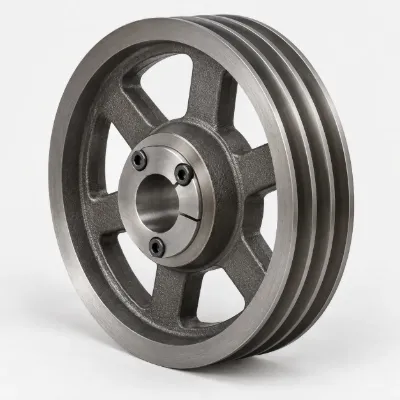
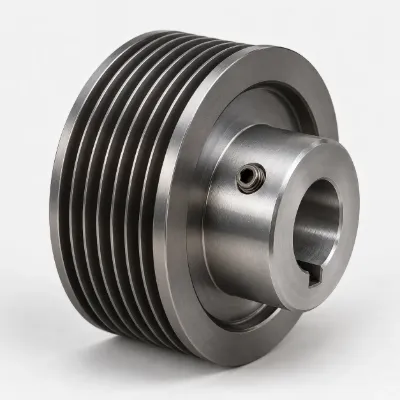
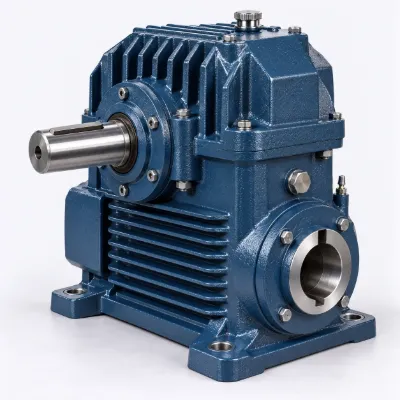
Pulleys made to your ratio
-
Flagship
-
-
-
FAQ
Ratio questions
Divide the driven pulley's teeth (or diameter) by the driver's. A 24 tooth motor pulley driving a 60 tooth pulley gives 2.5 : 1, so the output turns 2.5 times slower.
Output rpm = input rpm × driver teeth ÷ driven teeth. At 1440 rpm, a 24 T to 60 T drive gives 576 rpm.
Yes. The belt teeth mesh with the pulley teeth, so there is no slip and the ratio stays exact, unlike a V belt.
Yes. Send the ratio, profile and shaft sizes and we machine the pair, bored and keyed or for taper lock bushes.