Poly V Pulley Manufacturer in Ahmedabad
Pulleys
One ribbed belt, smaller pulleys, more grip
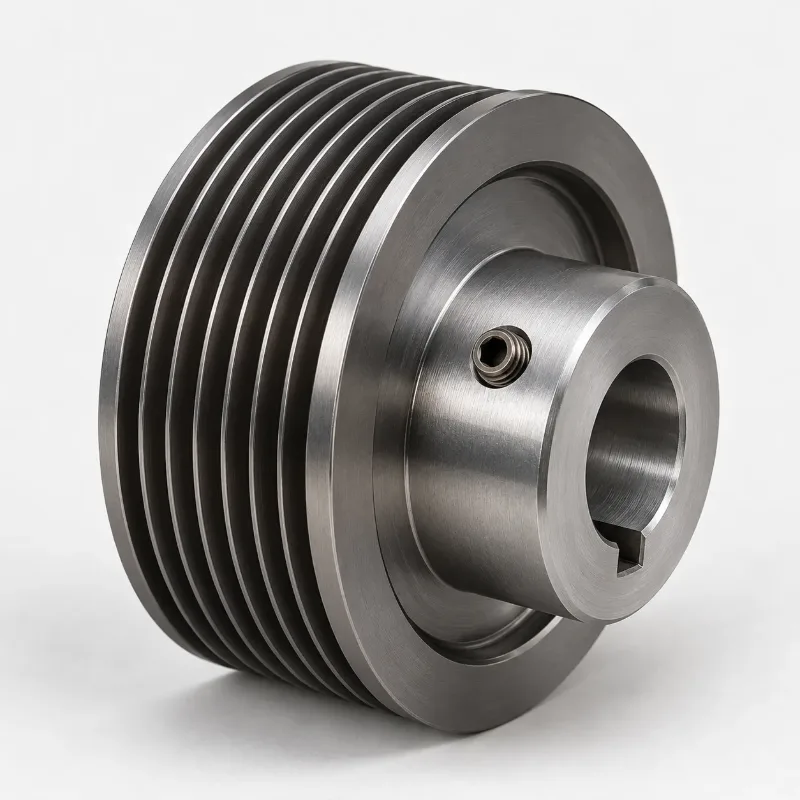
Multi rib poly V pulleys in PH, PJ, PK, PL and PM profiles, in cast iron, mild steel or aluminium, made to your rib count and diameter. For compact, high speed drives on a single ribbed belt.
A poly V pulley drives a flat belt with several V shaped ribs on its inner face. The ribs give more contact area than a single V belt, so the drive grips well on smaller pulleys and runs at higher speeds in a narrow width.
We machine the ribs to the standard profile of your belt and to the rib count you need, then finish the bore and keyway. For classical drives with separate belts, see our V belt pulleys.
Poly V pulleys, also known as serpentine or multi ribbed pulleys, are used across industrial sectors for reliable power transmission and motion control. They suit both light duty machinery and high performance systems, and are widely used where space is limited or high torque is required. We offer them in various sizes, materials and configurations, ready made or customised.
- Since 1997
- Made to drawing
- Made in Ahmedabad
Download the poly V pulley cataloguePDF, 12 pages, 2.6 MB
At a glance
- Profiles
- PH, PJ, PK, PL, PM
- Rib pitch
- 1.60 mm (PH) to 9.40 mm (PM)
- Small pulleys
- Diameters from 9 mm with the PH profile
- Materials
- Aluminium, mild steel, stainless steel, cast iron, Delrin, nylon and EN series steels
- Bores
- Pilot bore or finished bore with keyway
- Made to
- Your rib count and diameter
Rib profiles
PH, PJ, PK, PL and PM rib profiles
Match the profile letter in your belt code, for example 6PK1200 is a 6 rib PK belt.
Multi rib (poly V)
Poly V rib profiles
Rib pitches follow the standard poly V series.
| Profile | Rib pitch | Belt thickness | Max ribs per belt sleeve | Typical duty |
|---|---|---|---|---|
| PH | 1.60 mm | 2.9 mm | 24 | Fractional horsepower, light duty |
| PJ | 2.34 mm | 3.8 mm | 96 | Light duty, high linear speeds |
| PK | 3.56 mm | 4.5 mm | 24 | Automotive and machine tool drives |
| PL | 4.70 mm | 7.0 mm | 50 | Medium duty industrial drives |
| PM | 9.40 mm | 13.5 mm | 40 | Heavy duty drives |
Max ribs per sleeve is a belt maker’s sleeve figure, not a pulley limit. We machine the rib count your belt needs.
Choosing a drive
Poly V or V belt: which drive suits you
-
Smaller pulleys
Ribbed belts bend around smaller diameters, so drives get more compact.
-
Narrower drives
One belt replaces a set of V belts in less width.
-
One belt, many shafts
A single belt can drive several accessories in a serpentine layout.
-
When V belts win
For very heavy, shock loaded drives, multi groove V belt pulleys are still the robust choice.
Materials
Poly V pulleys in cast iron, steel, aluminium and plastics
-
Aluminium
Light with low inertia, so drives start and stop quickly.
Best for: general machinery
-
Mild steel
Tough and economical, machined from bar for most industrial parts.
Best for: general duty
-
EN series steels
Carbon and alloy steels, hardened where needed for high torque and wear.
Best for: high load
-
Stainless steel
Resists corrosion where machines are washed down or run wet.
Best for: food and pharma
-
Cast iron
Stable and economical for large diameter, heavy duty parts.
Best for: large diameters
-
Delrin and nylon
Quiet and light, with no lubrication needed.
Best for: light, quiet drives
Benefits
Features and benefits of poly V pulleys
-
Compact and light
Smaller diameters and a reduced pulley width give a lighter drive that saves space.
-
No matched belts
One continuous belt avoids length mismatch and removes the need for matched belt sets.
-
Excellent grip
A large wedge contact area gives high torque performance with reduced slippage.
-
Longer bearing life
Lower static tension helps bearings last longer and reduces maintenance.
-
Quiet, smooth running
Runs quietly, with minimal vibration and heat generation.
-
High speed performance
Suits high speed drives and helps deliver better output with lower energy use.
Replacing a pulley
How to measure a poly V pulley
-
Count the ribs
Count the grooves across the face.
-
Measure the rib pitch
Measure across several ribs and divide by the number of gaps.
-
Measure the diameter
Outside diameter over the ribs.
-
Note bore and hub
Bore, keyway and hub length.
Industries
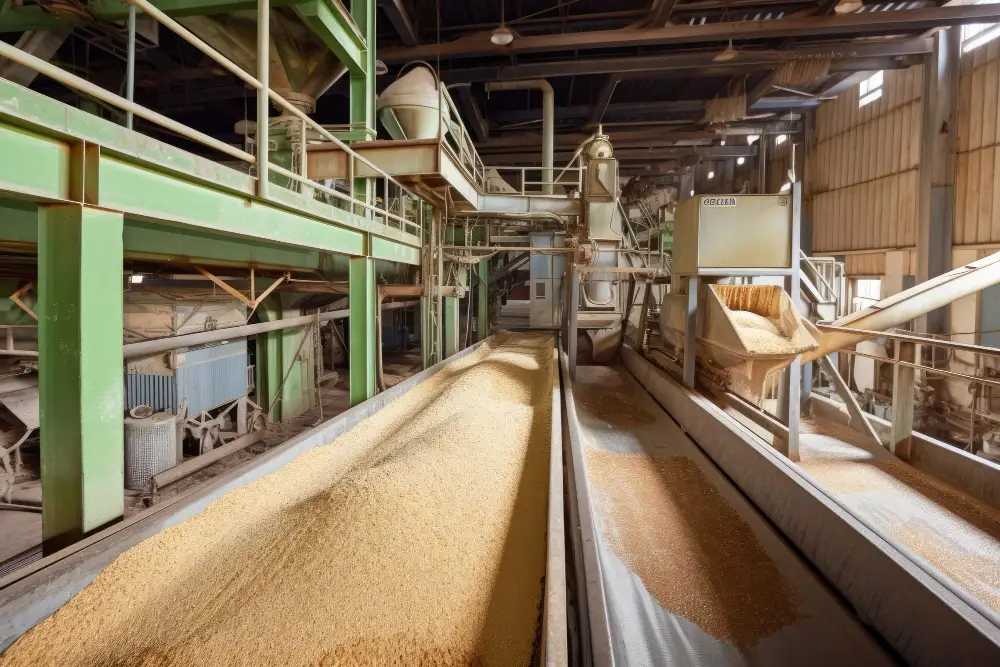
Where our poly V pulleys run

FAQ
Poly V pulleys: common questions
Quick answers for maintenance and purchase teams.
Read the belt code: 6PK1200 means 6 ribs of PK profile and a 1200 mm length. The rib pitch is 2.34 mm for PJ, 3.56 mm for PK, 4.70 mm for PL and 9.40 mm for PM.
Choose poly V for compact drives with smaller pulleys, higher speed ratios or one belt driving several shafts. Stay with V belts for very heavy, shock loaded drives.
Count the ribs, measure across several ribs and divide by the number of gaps to get the rib pitch, then measure the outside diameter and the bore.
Aluminium, mild steel, stainless steel, cast iron, Delrin, nylon and EN series steels. Aluminium suits light, fast drives, mild steel and EN series steels suit high torque and wear, stainless steel suits washdown areas, cast iron suits large heavy parts, and Delrin or nylon suit light, quiet drives.
Yes. Tell us the profile, rib count, diameter and bore, or send a drawing or sample, and we machine to suit.
Related products
-
-
 Flagship
-
-