
Table of Contents
- Introduction
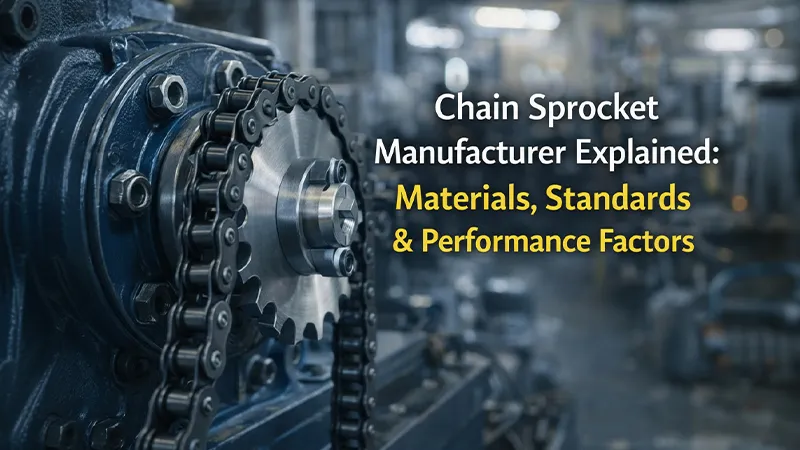
In industrial power transmission systems, the role of a chain sprocket is fundamental. From conveyor systems and agricultural machinery to automotive assemblies and heavy-duty processing equipment, sprockets transfer motion and torque efficiently when paired with roller chains. Choosing the right chain sprocket manufacturer is not only about sourcing a component; it is about investing in durability, precision, and long-term mechanical performance.
As industries demand higher efficiency, reduced downtime, and longer operational life, the need for a trusted chain sprocket supplier becomes increasingly critical. explains the materials used in chain sprockets, the standards governing their production, and the key performance factors that determine their reliability in real-world applications.
Understanding the Role of a Chain Sprocket
Chain sprockets are profiled teeth on a wheel to fit into a chain. As the sprocket turns, the links of the chain are caught and are used to pass rotary movement between one shaft and another. This is a common mechanism because it offers positive drive and does not slip thus it is applicable in high load and synchronized systems.
A chain sprocket manufacturer is a professional, and he is concerned with accuracy of the dimensions, tooth geometry and choice of material. A slight change in the pitch diameter or tooth profile could lead to chain wear, vibration and mechanical failure. Thus, the collaboration with a well-known supplier of the chain sprocket is a direct concern related to the machine productivity and safety.
Materials Used in Chain Sprocket Manufacturing
The strength of sprockets, wear life and service life are greatly dependent on the choice of material that is used. A veteran chain sprocket manufacturer will choose the materials depending on the load conditions, environmental exposure as well as the type of application.
- Carbon Steel: Extensively employed because of machinability and strength. It fits well in normal industrial settings.
- Alloy Steel: Has a greater tensile strength and fatigue resistance. Typically used in high-speed and heavy-duty.
- Stainless Steel: Used in food processing, chemical plants and marine work due to its resistance to corrosion.
- Cast Iron: Cost effective when moderate load is needed and where shock absorption is needed.
- Hardened Steel (Induction Hardened Teeth): The hardening of teeth enhances the longevity of the surface and preserves a hard core. This is the choice of many industrial buyers who want to find a supplier of chain sprockets in the case of demanding operations.
Treatment methods like carburizing, induction hardening and quenching enhance wear resistance and hardness on the surface. The quality of materials used together with machining accuracy has a direct influence on the quality of sprocket life.
Manufacturing Process of Chain Sprockets
A professional chain sprocket producer has the following sequential production procedure:
- Raw material inspection
- Cutting and forging (if required)
- CNC machining for accurate pitch and tooth profile
- Heat treatment
- Surface finishing
- Quality inspection and dimensional verification
Modern CNC systems are useful in maintaining accuracy in pitch and concentricity. The quality checks would consist of hardness, bore alignment and runout checks. The vendor of sprockets to be used is also a trusted supplier who ensures that they are compatible with standard roller chains.
Key Performance Factors
Knowledge of performance factors will assist the industries to choose the appropriate sprocket configuration.
- Tooth Profile Accuracy: Malformed teeth augment wear and vibration. Scoring is done carefully by a seasoned manufacturer of chain sprockets, and this gives high-quality engagement.
- Pitch Diameter Accuracy: Pitch mismatch leads to the distribution of the load and the elongation of the chain.
- Surface Hardness: Harder teeth are resistant to abrasion and increase durability of working life.
- Load Capacity: Torque performance is determined by both tooth design and material strength.
- Alignment and Concentricity: The appropriate bore machining provides the alignment of the shafts and mechanical stress..
- Environmental Resistance: When working in a corrosive environment, it is preferable to use stainless steel or coated types of a reputable supplier of chain sprockets to enhance their durability.
Maintenance and Longevity Considerations
As much as quality manufacturing is a key factor, maintenance also has an influence on service life. Premature wear is avoided by proper lubrication, regular checking of tension of chains and alignment inspection. Having a reputable supplier of chain sprockets means less failure rate since the grade of materials and correct machining will reduce the chances of cracking, tooth fracture and quick wear.
Customization and Engineering Support
Special bore diameters, hubs, keyways, or corrosion resistant finish may be needed by industrial operations. An engineering consultation is offered by a professional chain sprocket manufacturer to fit the requirements of certain machines. Tailored manufacturing enhances the consistency of performance and minimizes the installation changeover expenses. Cooperation with an informed chain sprocket supplier also helps in mass production and recurrent orders that follow the same quality standards.
Why Choose Us
The distinguishing factors of Muratech Engineering are its technical knowledge, production accuracy and adherence to industrial performance. Muratech Engineering, as a manufacturer of specialized chains of sprockets, is oriented to the high level of dimensionality, the reliability of materials, and quality control. The company uses sophisticated CNC control with close inspection to produce quality products. Being a reliable supplier of chain sprockets, Muratech Engineering offers various industries tailored solutions, punctual delivery, and qualified service. Such a tradeoff between the power and customer orientation is what makes Muratech Engineering a strong choice of industrial friend.
Conclusion
Selecting the right chain sprocket involves more than choosing a standard component; it requires attention to material strength, dimensional precision, and compliance with recognized standards. A trusted chain sprocket manufacturer contributes to smooth torque transmission, reduced downtime, and improved machine productivity. From carbon steel to hardened alloy options, every material serves a defined purpose based on load and environmental demands. Partnering with a reliable chain sprocket supplier supports operational efficiency and long-term mechanical reliability. By evaluating materials, standards, and performance factors carefully, industries can achieve consistent results and extend equipment life.
For advanced insight into Chain Sprocket Manufacturer Call +91 958-682-3032 or email muracopower@hotmail.com.
Key Takeaways
- Accurate tooth profile and pitch diameter prevent uneven load and premature chain wear.
- Material selection directly impacts strength, corrosion resistance, and service life.
- CNC machining and heat treatment improve durability and dimensional precision.
- Proper alignment and surface hardness enhance stability and operational efficiency.
- Working with an experienced chain sprocket manufacturer supports long-term mechanical reliability and performance consistency.