
| We Offer | |
|---|---|
| How to Choose the Right Chain Sprocket for Smooth Power Transmission | |
| Call Now | +91-958-682-3032 |
| +91-958-682-3032 | |
| Eligible Region | India |
| Category | Chain Sprocket |
| Payment Methods | Cash, UPI, Net Banking |
Selecting the right chain sprocket is one of the most critical decisions for maintaining smooth, consistent and trouble-free operation in any mechanical system. From conveyors and compressors to heavy-duty industrial machinery, the performance of a power transmission system depends heavily on how precisely a chain sprocket matches the application. A poorly selected sprocket increases vibration, friction, wear, noise and power loss, ultimately reducing the lifespan of connected components. In contrast, a well-chosen Chain Sprocket for Power Transmission offers stable torque transfer, balanced load distribution and dependable operation even under demanding conditions.
For industries relying on accurate motion control, choosing the correct sprocket is not just a technical choice—it is a strategic business decision that impacts productivity, operating cost and long-term machinery health. Companies like Muratech Engineering Company have helped industrial users understand these technical considerations by providing high-grade sprockets engineered for reliability and long-term stability.
Understanding the Role of Chain Sprockets in Power Transmission
What a Sprocket Actually Does
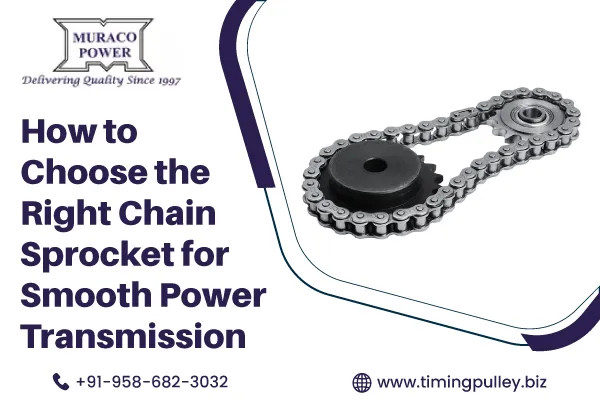
A sprocket is a toothed wheel that engages with a roller chain to transmit mechanical power from one shaft to another. This combination supports accurate timing, controlled motion and proportional torque transfer, which is why Power Transmission Chain Sprockets are extensively used in industrial equipment.
Why Sprocket Quality Directly Impacts System Performance
The geometry, hardness, tooth design and alignment of sprockets decide how efficiently the chain links engage. Precision-machined sprockets supplied by manufacturers like Muratech Engineering Company reduce slippage, prevent chain elongation and maintain consistent rotational speed.
Key Factors Influencing Industrial Chain Sprocket Selection
Choosing the perfect sprocket requires understanding technical, mechanical and operational factors. Below is a detailed breakdown to guide buyers and engineers.
- Chain Pitch Compatibility: The pitch defines the distance between chain roller centers. Incorrect pitch matching results in tooth impact, premature wear and loss of accuracy. For reliable functioning, the sprocket must match the chain standard (ANSI, BS, ISO, etc.).
- Number of Teeth: Selecting the correct tooth count is essential for proper speed ratio and torque transfer.
• A higher tooth count means smoother rotation.
• A lower tooth count delivers higher torque but creates more stress.
Industries select tooth counts based on load characteristics, speed needs and system design principles. - Material Selection: Sprocket materials significantly affect operating life:
• Carbon Steel: Durable and economical for general industrial use.
• Alloy Steel: High strength for heavy-load applications.
• Stainless Steel: Ideal for food, pharma and corrosive environments.
• Cast Iron: Suitable for low-speed, high-torque systems.
Manufacturers such as Muratech Engineering Company typically offer a full range of engineered materials to match specific applications. - Bore Type (Finished, Taper Lock, or Pilot Bore): The bore type influences installation precision and shaft alignment:
• Finished bore sprockets are ready for assembly.
• Taper lock sprockets offer secure mounting and reduced slipping.
• Pilot bore sprockets allow customization for unique shaft sizes.
Selecting a bore type that fits your operational design helps maintain consistent movement and reduces vibration. - Operational Load Conditions: Load characteristics—start-stop cycles, variable torque, shock loads—decide sprocket hardness, thickness and weight. For high-impact machinery, robust Best Chain Sprockets for Machinery are essential to avoid tooth chipping or fatigue failure.
- Speed Requirements: High-speed systems need precision machining, excellent tooth finishing and balanced sprocket geometry. Poorly made sprockets create vibration at high speeds, leading to chain jumping and increased wear.
- Alignment and Mounting Specifications: Accurate mounting and alignment help maintain the life of Power Transmission Chain Sprockets. Misalignment results in uneven wear, chain tracking errors and energy loss.
- Environmental Conditions: Temperature, humidity, chemical contamination, dust and wet environments directly influence sprocket material and coating selection.
Benefits of Choosing the Right Chain Sprocket
- Enhanced Power Transfer Efficiency: A perfectly matched Chain Sprocket for Power Transmission minimizes friction, maintains chain engagement and supports consistent torque flow.
- Reduced Wear and Maintenance Costs: The correct sprocket reduces wear on both sprocket teeth and chain rollers, extending overall system life.
- Stable Operational Speed: Uniform tooth geometry promotes smooth rotational motion, preventing speed fluctuations in conveyors, mixers, agitators and automated machinery.
- Noise Reduction: High-precision sprockets create less vibration and quieter operation—crucial for industries that require controlled acoustics.
- Increased Machinery Lifespan: When sprockets are selected with full technical compatibility, the entire drivetrain—from bearings to shafts—benefits from reduced load stress.
Types of Chain Sprockets Used Across Industries
- Simplex, Duplex and Triplex Sprockets: These represent the number of chain rows. Triplex sprockets offer high load capacity, while simplex models are ideal for lightweight applications.
- Idler Sprockets: Used for tensioning and guiding chains, idler sprockets support smooth motion and compensate for misalignment or slack.
- Plate-Type Sprockets: Industrial users often prefer plate sprockets for compact design and low-weight applications.
- Segmental / Split Sprockets: Designed for easy maintenance, split sprockets support fast installation without dismantling shafts.
- Hardened Tooth Sprockets: Heat-treated sprockets boost wear resistance, making them suitable for high-load power transmission systems.
Each of these sprockets is used in thousands of installations worldwide, and companies like Muratech Engineering Company deliver customized models tailored for specific operations.
Evaluating the Best Chain Sprockets for Machinery
Industrial buyers often compare options to identify the Best Chain Sprockets for Machinery. This evaluation includes:
- Tooth Hardness and Surface Finish: Harder teeth reduce friction and delay wear. Smooth finishing minimizes noise and improves chain engagement.
- Dimensional Accuracy: Precision in pitch diameter, hub diameter, and tooth spacing contributes to smoother chain running and reduced backlash.
- Compatibility With Lubrication Systems: Special coatings or materials may be needed for lubrication-free or food-grade machinery.
- Customization Needs: Customized Power Transmission Chain Sprockets often deliver better performance in specialized setups such as automated packaging lines or multi-axis conveyors.
Role of a Chain Sprocket Manufacturer in India
A dependable chain sprocket manufacturer in india adds immense value by:
- Offering accurate pitch and tooth geometry
- Providing multiple material choices
- Maintaining high machining precision
- Supporting custom designs
- Delivering quality-tested products
Industry users rely heavily on manufacturer expertise. Companies like Muratech Engineering Company support buyers through detailed technical guidance, application-based selection and engineered sprocket solutions.
Partnering with the right chain sprocket manufacturer in india improves reliability, reduces downtime and increases production efficiency.
Step-by-Step Guide for Industrial Chain Sprocket Selection
- Define the Application Requirements: Identify load type, speed, torque and duty cycle.
- Evaluate Chain Standards: Confirm whether you need ANSI, BS, ISO or a specialized chain.
- Select Material and Hardness Levels: Match material performance with environmental and operational demands.
- Choose Bore and Hub Configuration: Decide between pilot bore, taper lock or finished bore variants.
- Determine Tooth Count and Pitch Diameter: Match the required speed ratio and torque needs.
- Assess Alignment Requirements: Confirm mounting arrangement and shaft orientation.
- Consult a Technical Expert: Manufacturers such as Muratech Engineering Company offer engineering advice to optimize sprocket selection for industrial machinery.
Advanced Considerations for Power Transmission Chain Sprockets
- Load-Bearing Ability Under Dynamic Stress: Consider sprocket behavior under fluctuating loads, reversing motion and high-impact cycles.
- Material Treatment Options
• Nitriding
• Carburizing
• Black oxidizing
These treatments improve wear and corrosion resistance. - Balancing and Concentricity: High-speed machinery requires precision balancing to reduce vibration.
- Chain-Sprocket Interaction Geometry: Correct tooth profile ensures accurate roller seating, reducing shock loads and tooth breakage.
- Lubrication and Maintenance Needs: Compatibility with lubrication methods—manual, automatic drip, bath or dry-run—is essential.
All these advanced considerations reinforce why selecting the right Chain Sprocket for Power Transmission directly influences system efficiency.
Why Choose Us
Choosing Muratech Engineering means partnering with a company that values precision, integrity, and long-term reliability. With over 35 years of specialized experience, we focus on crafting Mechanical Power Transmission Products that deliver consistent performance across demanding industrial applications. Every component is manufactured with attention to detail, backed by technical expertise and a deep understanding of O.E.M requirements. Our commitment to quality, timely service, and continuous innovation has helped us build lasting relationships with global manufacturers. When you seek dependable products, expert support, and a team dedicated to your success, Muratech Engineering stands as a trusted name you can count on.
Conclusion
Selecting the right sprocket is fundamental for building a smooth, balanced and high-efficiency power transmission system. The correct choice minimizes friction, supports consistent torque flow and improves machinery longevity. With multiple materials, tooth counts, bore configurations and design standards available, a careful evaluation helps users avoid unexpected failures or performance drops. Working with an expert chain sprocket manufacturer in india such as Muratech Engineering Company offers valuable guidance, precise customization and high-quality components. A properly selected Chain Sprocket for Power Transmission strengthens overall machinery reliability and performance.
For expert guidance and high-quality sprockets, call +91-958-682-3032 or email muracopower@hotmail.com to discuss your power transmission requirements today.